Analytics Transformation:

SAP BusinessObjects to Power BI Migration

Migration Strategy

Transform enterprise reporting infrastructure by migrating from SAP BusinessObjects to Microsoft Power BI platform while maintaining operational continuity and enhancing analytical capabilities.
Goal: Complete migration of reporting &amp analytics stack from SAP BusinessObjects to Microsoft Power BI.
Scope: Reporting stack components (Web Intelligence, Lumira, Crystal Reports, Universe).
End State: SAP BO sunset with modernized Power BI datasets, dashboards and comprehensive reporting suite.

Constraints

  • Lack of automated tools: No market solutions available for migration or rapid deployment between SAP and Microsoft ecosystems.
  • Competing technology landscapes: SAP vs Microsoft platforms with fundamentally
    different architectures and approaches.
  • Diverse deployment models: On-premise legacy systems vs Native Cloud infrastructure requiring hybrid integration.
  • Complex security frameworks: User authentication and data security models requiring careful SSO and RBAC migration planning.

Prerequisites

  • Complete SAP BO Sunset: Shutdown Business Objects entirely post-migration.
  • Semantic Layer Strategy: Utilize BO Universe as a foundation for Power BI Dataset creation.
  • Migration Scope Definition: Reporting stack in entirety (CMS, Semantic Universes, Web Intelligence, Crystal Reports and Lumira).
  • Resource Planning Dependency: Migration timeline, team allocation, and effort estimation based on the defined end-goal scope.

Migration Methodology

4-Step Strategic Approach:

  1. Repository Rationalization: Comprehensive analysis of SAP BO repository to identify and
    prioritize migration objects.
  2. Fitment Analysis: Strategic mapping of SAP BO objects to Power BI equivalents with customization documentation.
  3. Pre-Delivery Checklist: Infrastructure setup including SSO, RBAC, connectivity protocols, and security frameworks.
  4. Agile Delivery Model: Sprint-based delivery with overlapped development, UAT, and continuous deployment cycles.

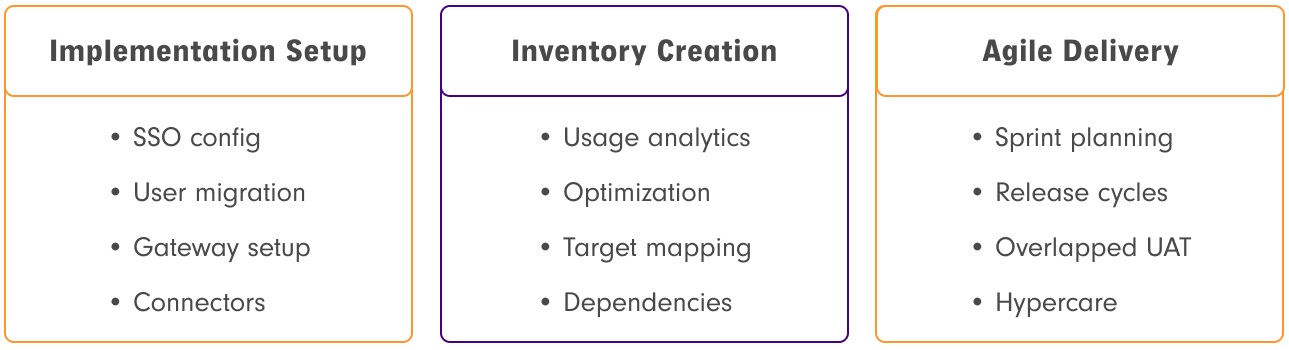
Implementation Framework:

Migration Guidelines:

  • Reporting stack exclusive migration scope
  • Universe to Power BI dataset transformation
  • Multi-format report conversion (Dashboards/Reports/Paginated)

Case Study Implementation

Client Profile: Construction Material Manufacturing

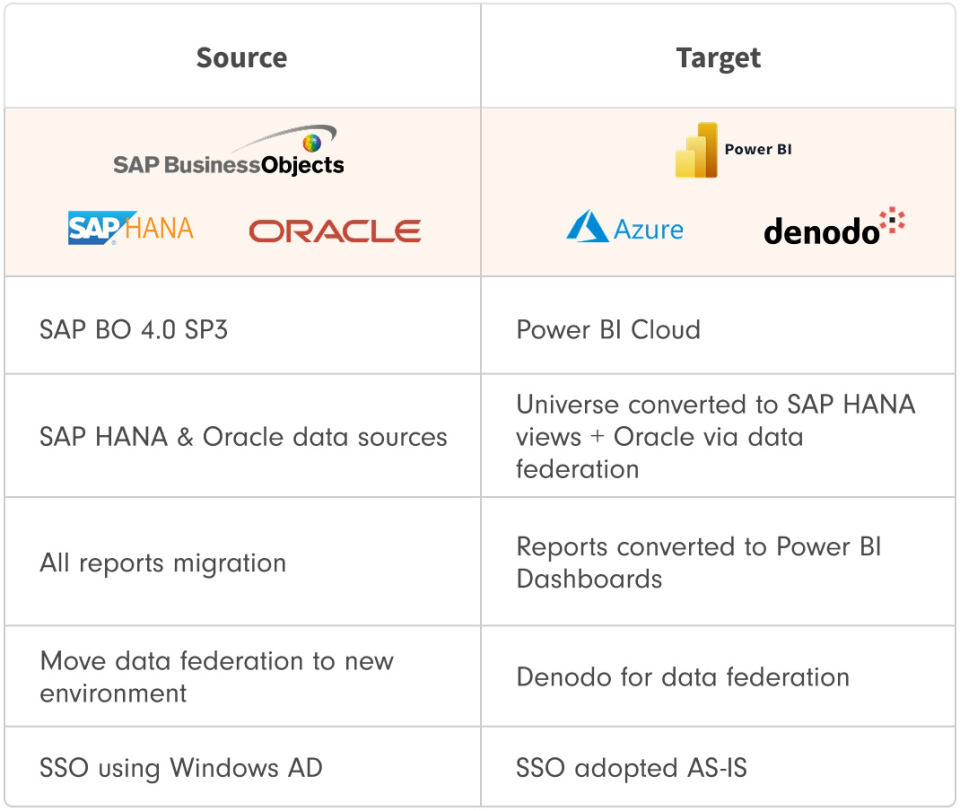
Source → Target Mapping:

Implementation Challenges & Solutions:

  • Inventory Complexity: Large-scale finance and operations silos consolidated with 50% reduction.
  • Performance Optimization: Data federation bottlenecks resolved through Azure and Snowflake staging.
  • Data Alignment: WebI/Crystal logic inconsistencies rebuilt in Data Warehouse or at the reporting layer using Power BI DAX.

Key Features/Functionalities:

  • Complete reporting stack migration
  • Hybrid cloud-on-premise architecture
  • Advanced security integration (SSO /
    RBAC)
  • Performance-optimized data staging
  • Agile delivery methodology
  • Comprehensive hypercare support

KPIs Measured:

  • 50% inventory reduction achieved
  • Enhanced performance through strategic staging
  • 2-way data reconciliation matching for all critical KPIs
  • 4-week hypercare and train-the-trainer completion
  • Seamless security with workspace separation
  • Zero-downtime migration execution
  • User adoption and satisfaction metrics

Talk to us